The Bits of Your Garden You Don’t Notice Until the Weather Changes
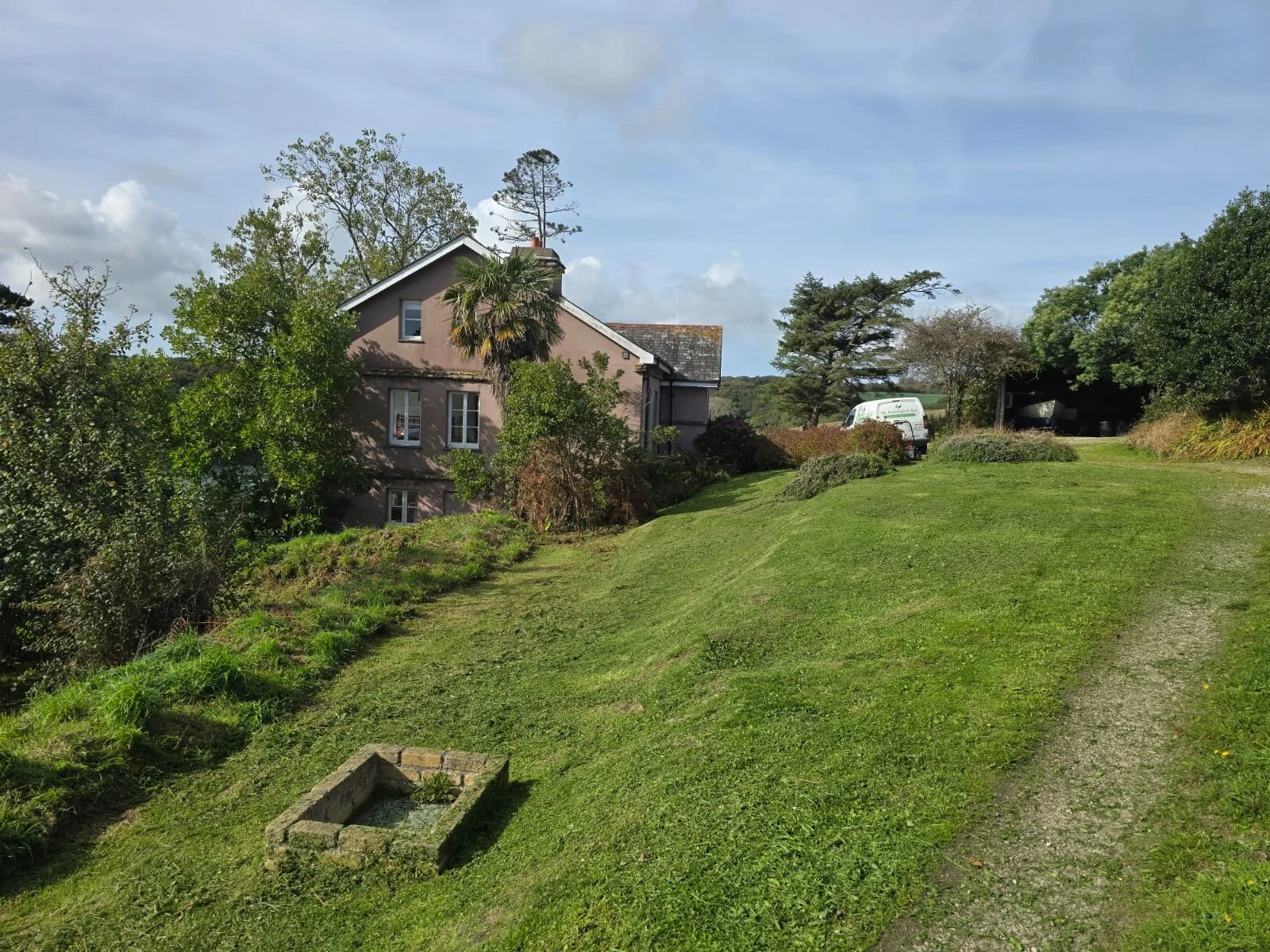
September sunshine. We’ll take it while it lasts.
September’s a funny old month in Cornwall.
You can be in shorts one day, then digging a coat out of the van the next.
The evenings are starting to pull in, there are a few more leaves on the ground and, after what’s been a long dry summer, the garden starts to change a bit.
And that’s when you tend to notice things.
That corner that suddenly holds water.
The path that stays damp.
The bit of lawn that goes soft underfoot.
Or the patio that seemed absolutely fine when the sun was shining, but after a proper Cornish downpour has a puddle big enough for a duck.
We see it all the time working in gardens around Cornwall.
The weather changes and suddenly the garden starts showing you what’s actually going on.
First up. Water.
Always a good one in Cornwall.
After months of fairly dry ground, the first decent spells of rain can tell you quite a lot.
Have a wander outside after it’s been hammering down and see where the water goes.
Does it run away nicely?
Sit against the edge of the patio?
Collect on a path?
Turn one particular bit of lawn into a swamp?
A bit of standing water after an absolute biblical downpour isn’t necessarily a disaster. This is Cornwall. Sometimes there’s simply nowhere for the stuff to go quickly enough.
But if the same areas struggle every year, it’s worth finding out why.
It could be the levels, compacted ground, poor drainage or simply that the garden was never really designed with that amount of water in mind.
Drainage isn’t the most exciting part of landscaping.
Nobody’s ever invited the neighbours round to admire a drain.
But get it wrong and you’ll certainly know about it.
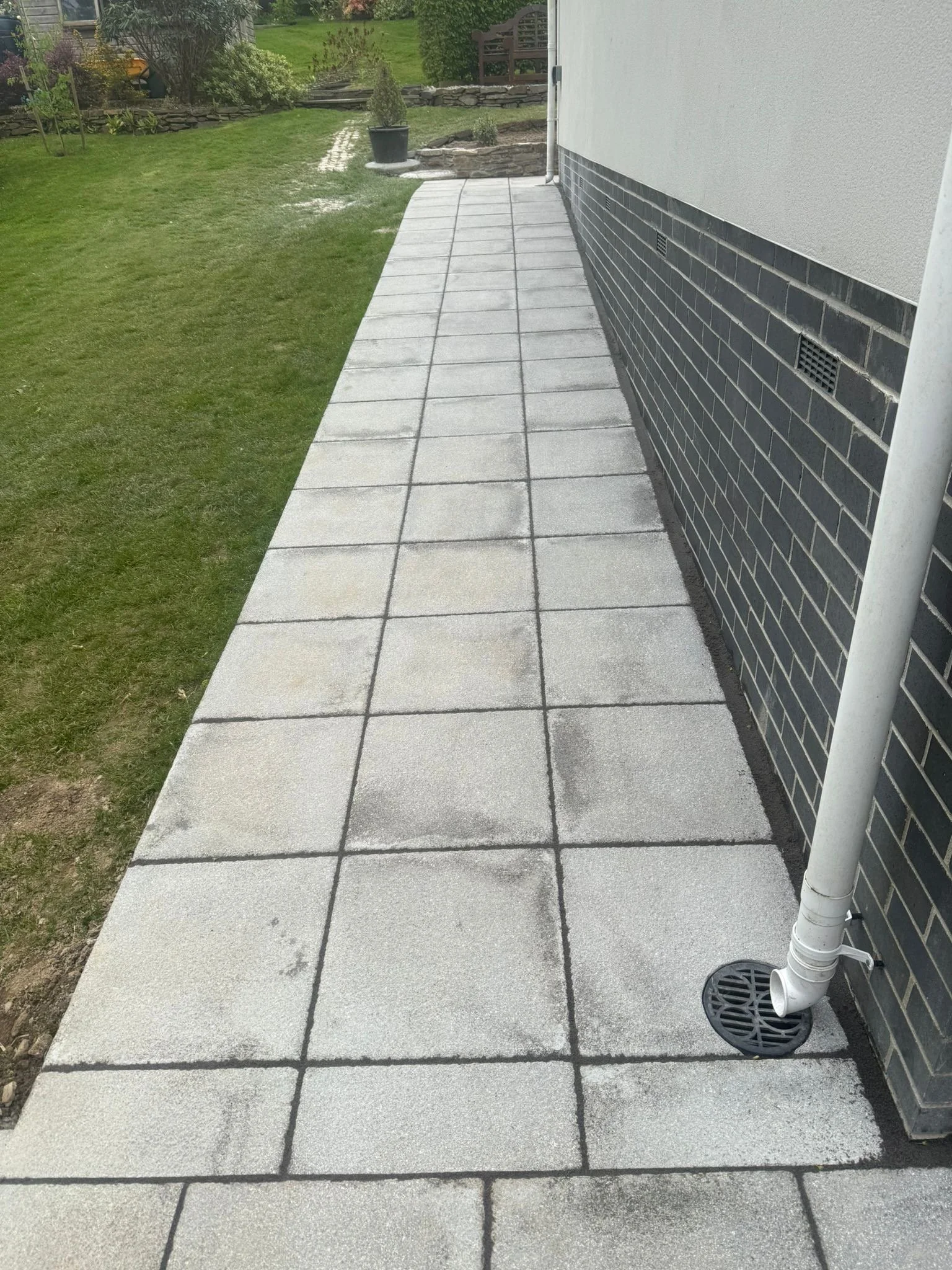
Sometimes the practical bits make all the difference.
Have a look at your paths and patios
They’re easy to ignore in summer.
Everything’s dry, you’re wandering around in flip-flops and life is good.
Then September arrives.
Leaves start dropping, shaded areas stay damp for longer and suddenly that slightly uneven slab you’ve walked over 400 times becomes a bit more obvious.
It’s worth looking for loose paving, tired pointing, areas holding water and anything becoming slippery.
That doesn’t automatically mean the whole patio needs to come up.
Far from it.
Sometimes a small repair is all that’s needed.
We’d much rather tell someone that than start ripping up half their garden for no reason.
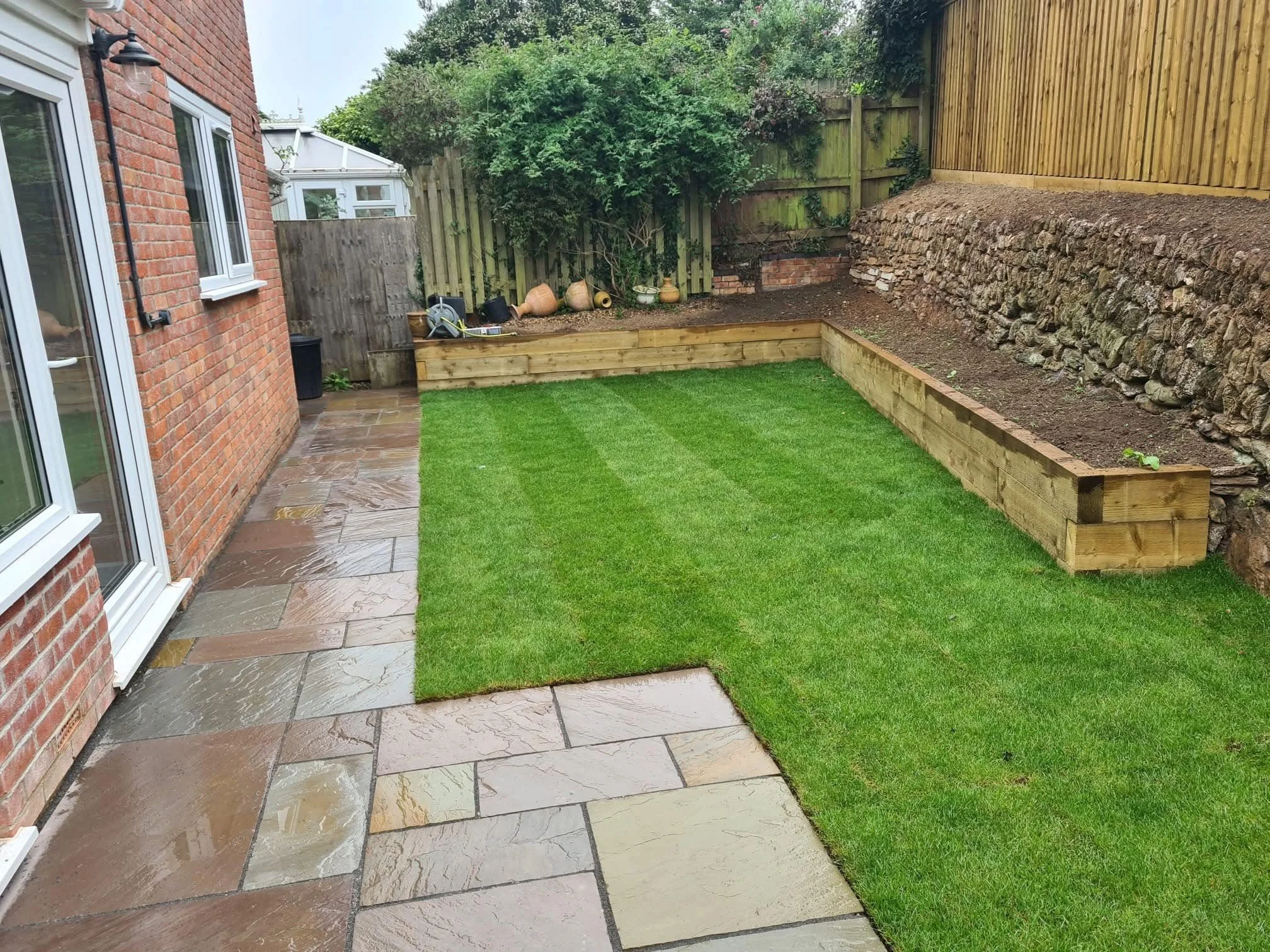
Fresh turf, new paving and everything starting to come together.
Then there’s the lawn
Lawns have had a bit of a battering this summer.
Dry weather tends to show one set of problems. Wetter weather shows another.
Once the rain starts coming back, keep an eye on any areas that become particularly soft or muddy.
If it’s the same patch every winter, chucking another bag of grass seed over it next spring probably isn’t going to achieve much.
There may be something else going on underneath.
And sometimes grass simply isn’t the best answer for that particular spot.
A bit of gravel, planting, paving or a proper path might work far better.
Every garden is different.
That’s half the fun of it.
Autumn shows you the garden again
This is one of the things I quite like about this time of year.
Summer gardens can hide a lot.
Everything grows like mad, borders fill out, hedges get bigger and before you know it you’ve lost three feet of garden and possibly a small child.
Once things start dying back a little, you can properly see the shape of the place again.
You notice where a border has got a bit carried away.
Where a hedge could do with bringing back.
Where two parts of the garden don’t really join together.
Or where there’s a perfectly good bit of space that nobody ever uses.
If you’re thinking about having any landscaping work done in Cornwall over the coming months, this is actually useful.
Don’t just think about what you’d like the garden to look like.
Think about what isn’t working now.
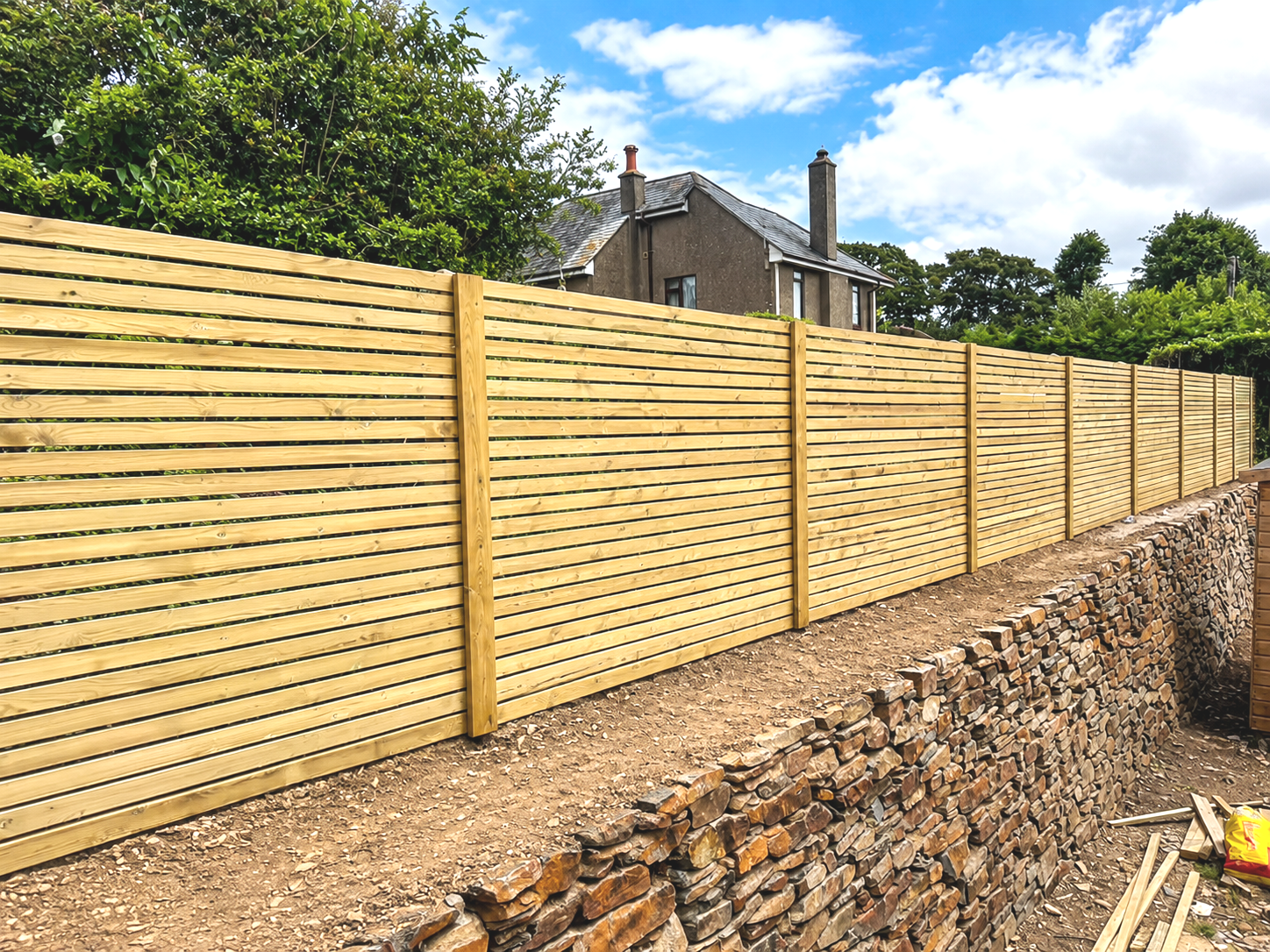
New fencing above the existing stonework. Simple, tidy and built to last.
And then there’s the wind
We can’t really talk about Cornish gardens without mentioning it.
Some gardens around Falmouth, Truro and down towards the Helford can be lovely and sheltered.
Others feel like they’ve been built in a wind tunnel.
And you don’t always realise quite how exposed a garden is until summer starts disappearing.
That makes a difference to planting, fencing, trees and where you put seating areas.
A lovely little corner for a table and chairs isn’t quite as lovely if your napkins are halfway to St Austell before you’ve sat down.
It sounds obvious, but think about where you naturally spend time in the garden.
The best landscaping normally works with the garden rather than fighting against it.
Where did you actually sit this summer?
This is a good one.
Forget where the patio should be for a minute.
Where did you actually sit?
Where was the evening sun?
Where did everyone end up when friends came round?
Did you use the patio?
Was it big enough once the table, chairs, barbecue, kids and dog were all involved?
Or did you spend half the summer dragging a chair onto the lawn because that was where the sun was?
Those little things are worth remembering if you’re planning changes.
A garden can look lovely in a photograph and still be a pain to actually live with.
We’d always rather build something that gets used.
You don’t need to sort the whole lot now
Most importantly, don’t read this and decide the entire garden needs digging up before October.
It probably doesn’t.
Autumn and winter are actually really useful for watching what your garden does.
Take the odd photo after heavy rain.
Notice where the sun reaches.
See which paths you naturally use.
Look at where the leaves pile up and which areas stay wet.
Then, if you decide to change things, you’re starting with a much better idea of what the garden actually needs.
Not just what looked nice on Pinterest.
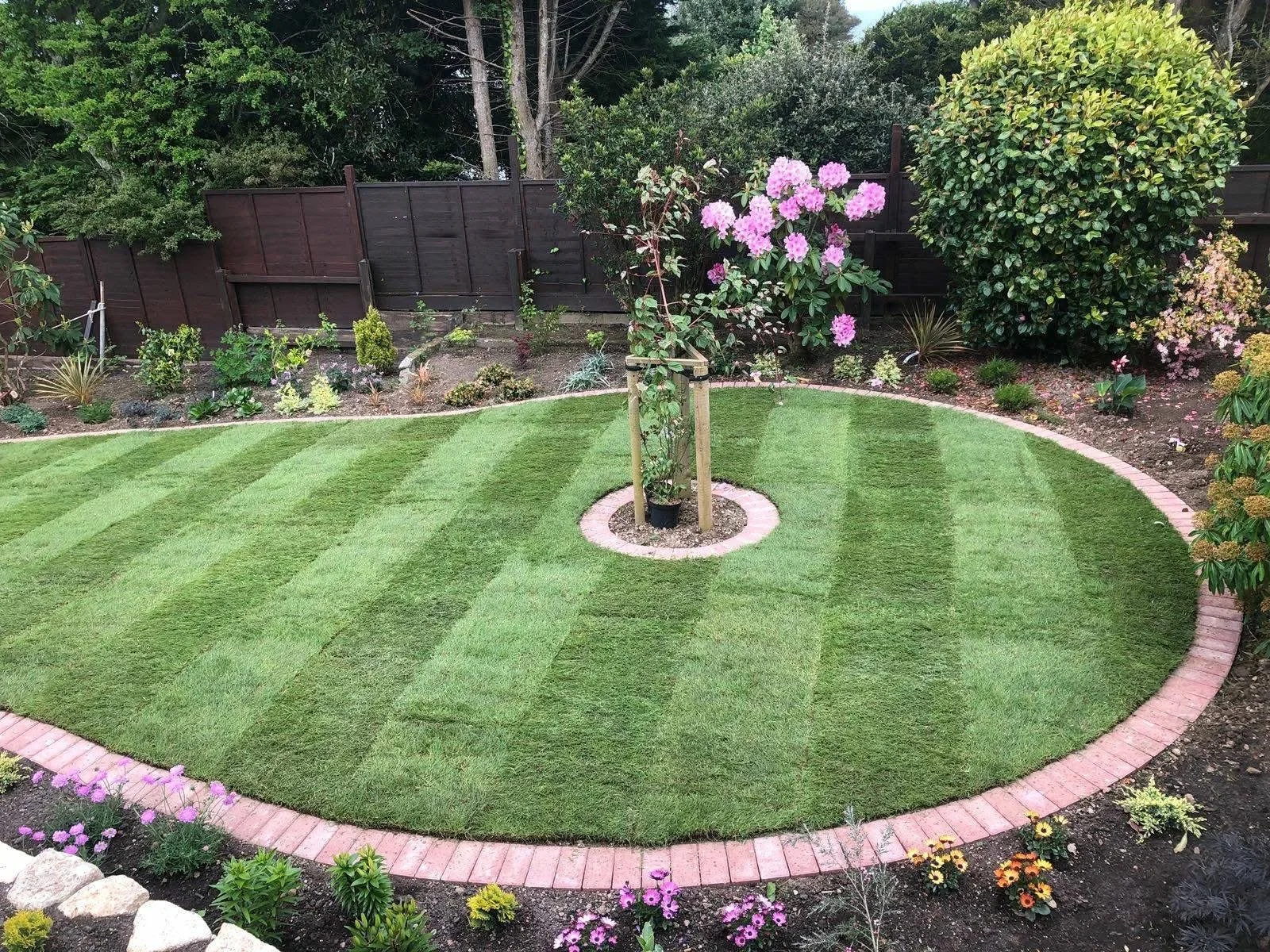
Fresh turf down and suddenly it looks like a garden again.
A garden that works in Cornwall
After years of landscaping around Cornwall, one thing you learn fairly quickly is that there isn’t a standard answer.
Two gardens half a mile apart can behave completely differently.
Soil, drainage, levels, wind, shade, trees and how the owners use the place all make a difference.
For us, good landscaping isn’t just about getting everything looking smart for the finished photograph.
Obviously, we like that bit too.
But it needs to work.
In July when the barbecue’s out.
In September when the leaves start coming down.
And in January when it’s blowing a hoolie and the rain appears to be coming sideways.
That’s usually the real test.
So over the next few weeks, have a look around your garden when the weather turns.
You might be surprised what it tells you.
Tom 🌿