What 40-odd Cornish Winters Teach You About Building a Garden
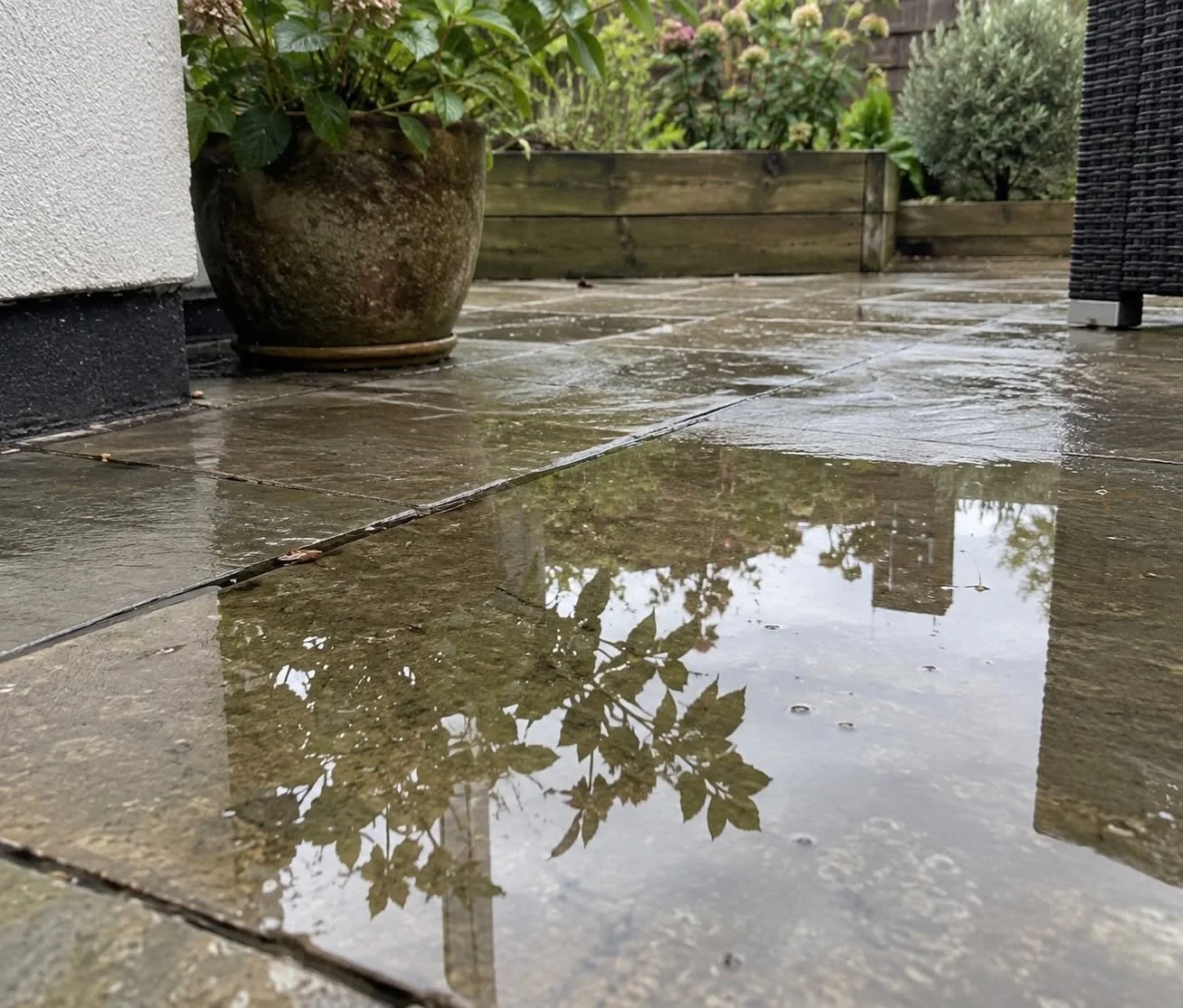
October’s a funny old month in Cornwall. You can be working in a T-shirt one afternoon and looking for the waterproofs the next morning. We’re only just into October, so I’m not writing summer off completely yet, but you can definitely feel things starting to change. The grass stays wet a bit longer in the mornings, the leaves are starting to come down and after a decent spell of rain you suddenly remember where all the puddles in the garden live.
We’ve been landscaping around Falmouth and Cornwall since 1979, which means we’ve seen a fair few Cornish winters. You learn a few things along the way, and probably the main one is that Cornwall will eventually find out whether you did something properly.
Water always finds somewhere to go
You can spend ages choosing paving, fencing and plants, but one of the first things we tend to look at in a garden is much less exciting: where’s the water going?
It matters down here. Some gardens drain beautifully and you barely have to think about it, while others seem determined to collect every drop of rain that falls within half a mile. October is often when you start noticing the problem areas again. That patch of lawn stays soggy, water gathers beside the patio or a path suddenly becomes a small stream whenever we get a proper downpour.
Good garden drainage isn’t particularly glamorous, but it can make a huge difference. If we’re changing levels, laying a new patio or doing a larger landscaping job, we need to think about where the water is going before anything gets built. It’s considerably easier than wondering what to do with it afterwards.
Cornwall does like a slope
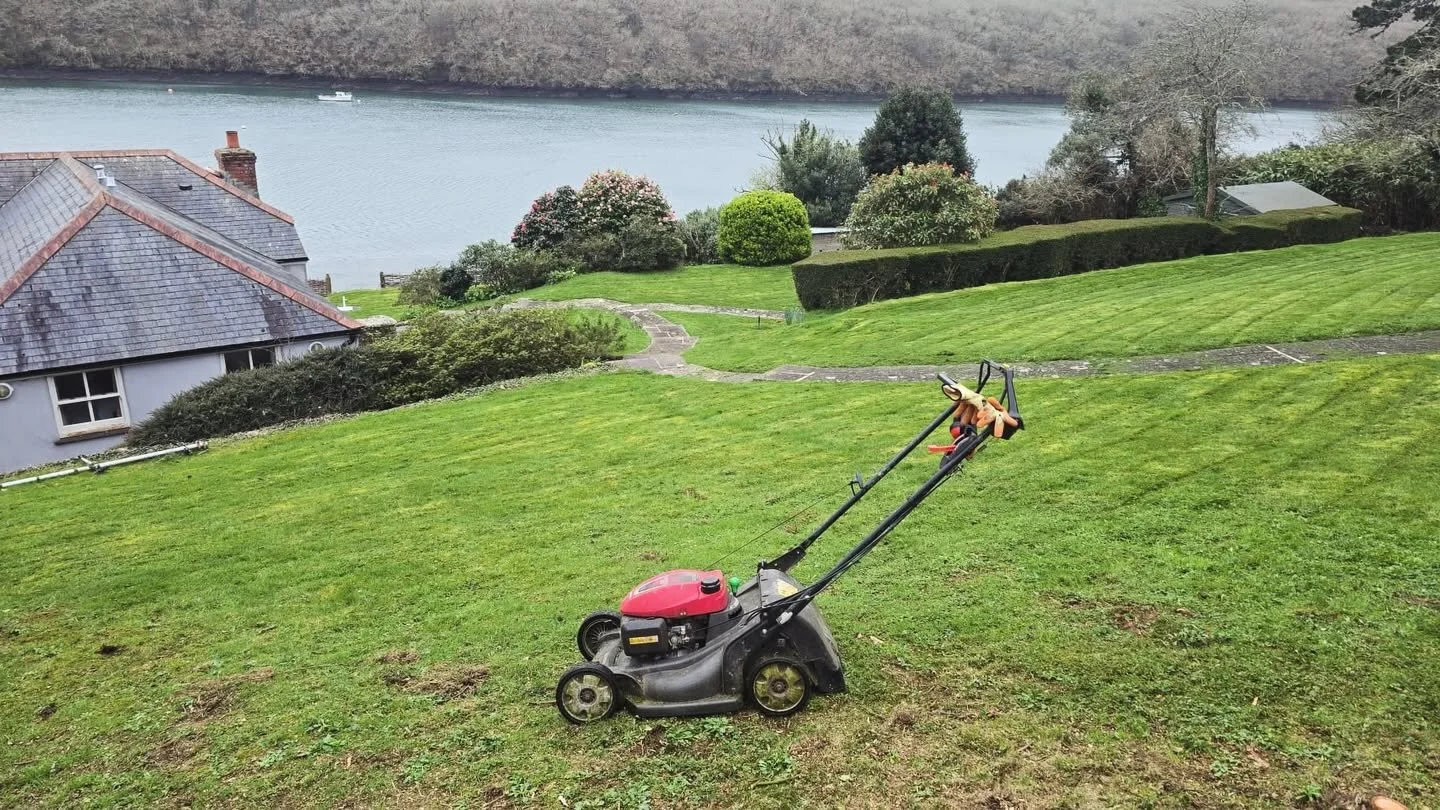
Anyone who has spent much time around Falmouth will know we aren’t exactly short of hills, and that continues into people’s gardens. We’ve worked on plenty where the back door and the bottom of the garden appear to be in different postcodes.
A sloping garden isn’t necessarily a bad thing. In fact, it can make for a really interesting garden, but you need to work with it rather than pretend it isn’t there. That might mean steps, retaining walls, different levels or simply changing the layout so the space becomes easier to use.
Getting those levels right also affects drainage, patios, lawns and paths, so it’s worth thinking about the whole garden rather than looking at each bit separately. Once everything is finished, most people will never think about the levels again. They’ll just have a garden that works, which is pretty much the point.
That fence will have to survive January
October is also about the time people start looking suspiciously at the fence. You know the one. It’s been leaning slightly for a while, but everyone has quietly agreed not to mention it.
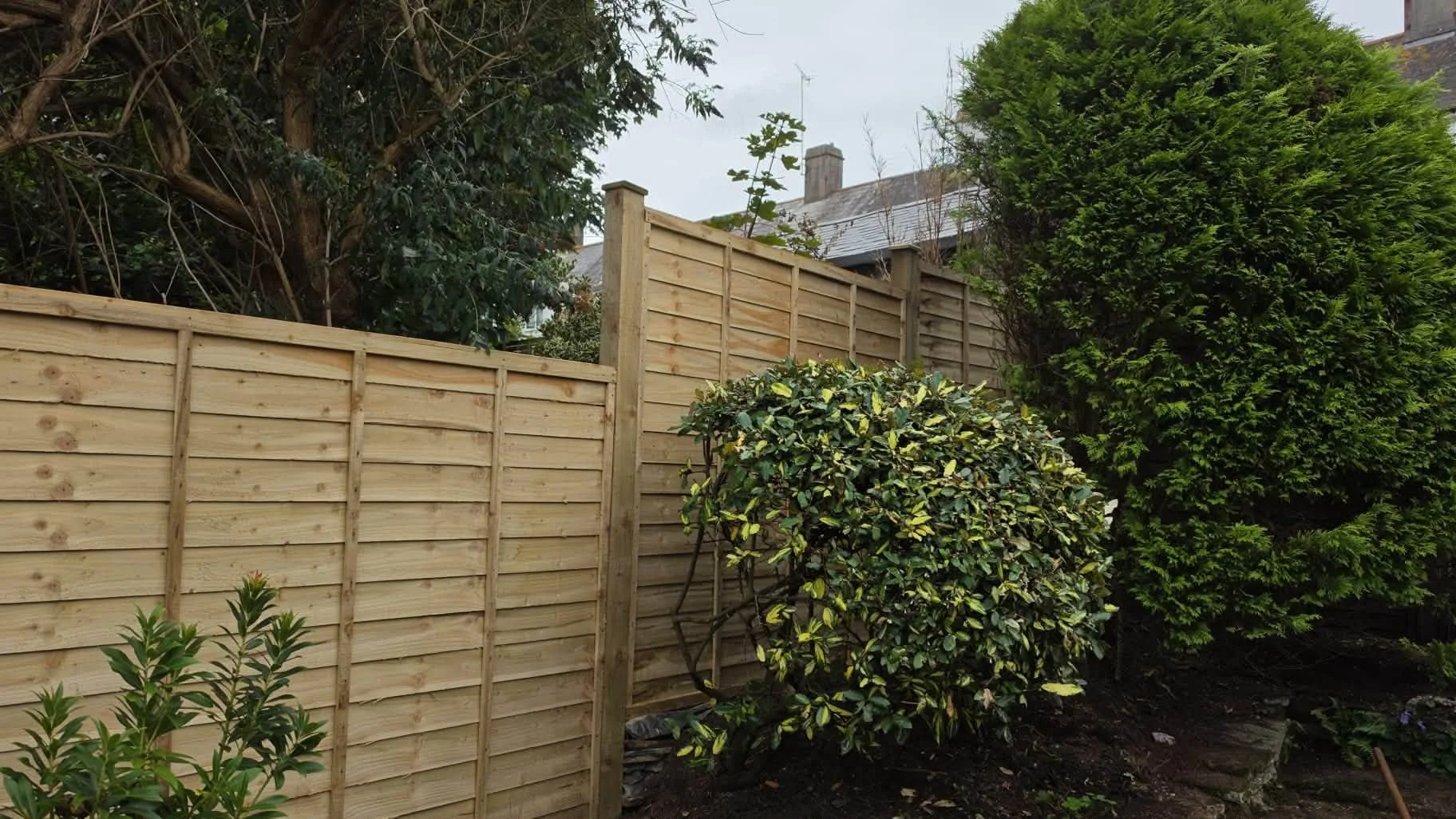
Fencing in Cornwall can get a fairly hard life, particularly in exposed or coastal gardens. When the wind gets going, the important bit isn’t necessarily the nice new timber you can see. It’s the posts, fixings and groundwork holding the whole thing up.
We always try to think about where a garden is and how exposed it is before putting fencing in. Something that’s perfectly happy in a sheltered garden might have a much tougher time somewhere catching everything coming in off the Atlantic. If the basics aren’t right, Cornwall will generally let you know sooner or later. Usually on a night when you’d rather stay in bed.
A patio starts long before the paving
A good patio should be fairly boring once it’s finished. Put some furniture on it, have a barbecue, spill a drink on it and occasionally remember that it could probably do with a clean.
What you shouldn’t have to do is wonder why half of it has sunk.
A lot of the important work in patio installation happens before the paving goes down. There’s digging out to do, the ground needs preparing, a proper sub-base needs to go in and the levels and falls need to be right. None of that makes for a particularly exciting finished photograph, because you can’t see any of it.
We’ve lifted enough old paving over the years to know that what’s underneath often tells you exactly why something has gone wrong. Doing the preparation properly takes time, but we’d much rather do that than come back later and wonder why a patio has moved.
Stone makes sense down here
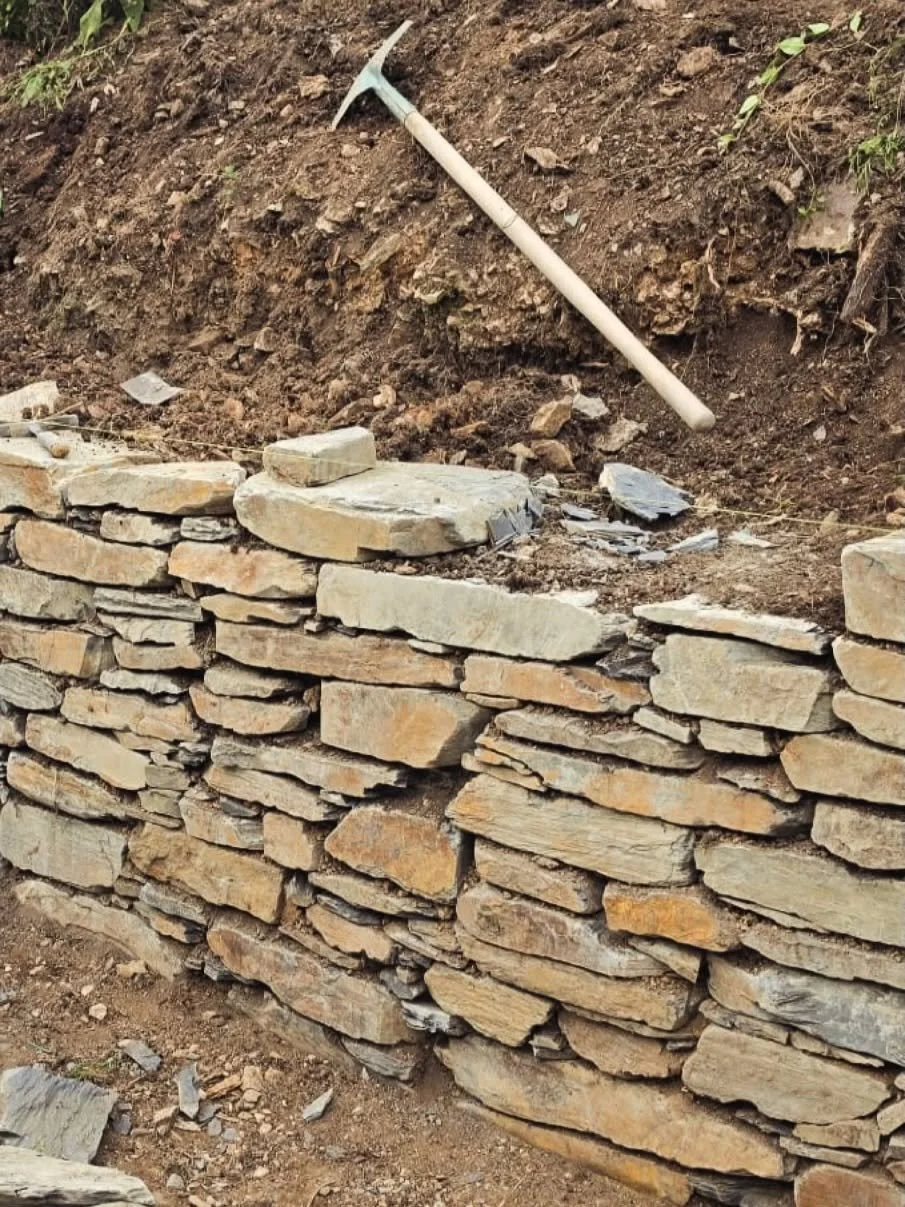
We do a fair bit of Cornish stone walling and dry stone walling, and it’s one of those things that just seems to belong in a Cornish garden. You don’t have to travel far around here before you find stone walls that have been standing for an awfully long time.
Over the years we’ve built new walls, repaired old ones and taken apart a few that were probably there long before any of us were thought of. There’s something nice about using the same sort of material that has been used around Cornwall for generations, particularly when you can reuse stone that’s already on the site.
It also gives you a bit of respect for whoever built some of the old ones. No mini digger, no laser level and presumably no radio playing in the van. They certainly earned their tea.
A garden still has to work
One of the simplest things we’ve learnt over the years is that there isn’t much point having a garden that looks lovely if it doesn’t actually work for the people living there.
Before changing a garden, it’s worth noticing how you already use it. Where do you naturally sit when the sun comes out? Which door do you actually use? Where do the children play? Where does the dog charge across the lawn every morning? And which corner catches so much wind that nobody has willingly sat there since 2018?
Sometimes the obvious place for a patio on paper isn’t actually the nicest place to sit. Sometimes a bit of screening makes more difference than another flower bed. Sometimes improving a path or changing a couple of levels makes the whole garden easier to use.
A garden doesn’t need to win an award. It needs to work.
October is a good time to have a look
I’m not suggesting everyone in Cornwall needs to rush outside this weekend with a clipboard, but October is actually a useful time to notice what’s happening in the garden.
We’re still getting some decent days, but there’s enough rain and wind starting to creep in to show up the little problems. Have a look after it rains and see where the water sits. Give that questionable fence post a wobble. Look at which parts of the lawn stay wet and think about which areas of the garden you actually used during the summer.
You don’t necessarily need to do anything about all of it now. Sometimes it’s simply useful to know what isn’t working, particularly if you’re thinking about landscaping the garden over the next year.
Because if something isn’t quite working in October, there’s a reasonable chance January isn’t going to improve it.
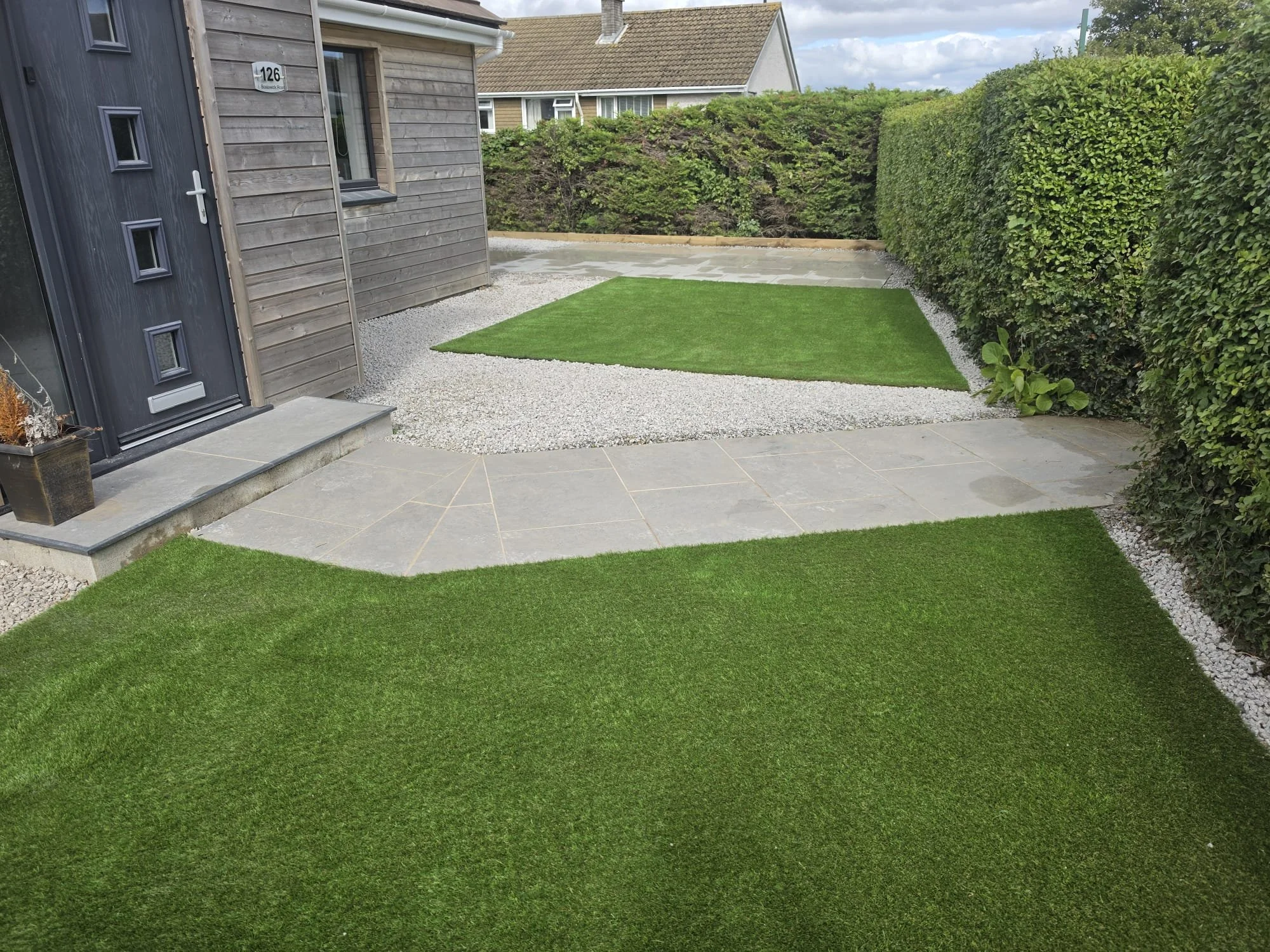
Building gardens in Cornwall
After more than 40 years of landscaping in Cornwall, I don’t think there’s any great secret to building a garden that lasts. Most of it comes back to doing the basics properly.
Prepare the ground, think about drainage, get the levels right and use materials that suit the garden. If you’re somewhere exposed, build with the wind in mind. And above all, make the garden work for the people who are actually going to use it.
We’ve been doing that around Falmouth and across Cornwall since 1979. The tools and materials have changed a fair bit in that time, but the weather certainly hasn’t.
Ask me again how much I love it in February.
Tom 🌿