There’s usually a day in November when getting to the shed starts to feel like an expedition. The lawn’s wet, the paths are slippery and the garden furniture has moved a few feet in the wind.
It’s tempting to assume that all landscaping has to wait until spring. Sometimes waiting is the right call, but plenty of work can still be done over winter. It depends on the job, the ground and what the weather’s doing.
Around Falmouth, Truro and Helston, winter can be mild one week and properly wet the next. So we’d rather look at the garden and talk honestly about what’s workable than promise a start date the weather might have other ideas about.
What landscaping can be done in winter?
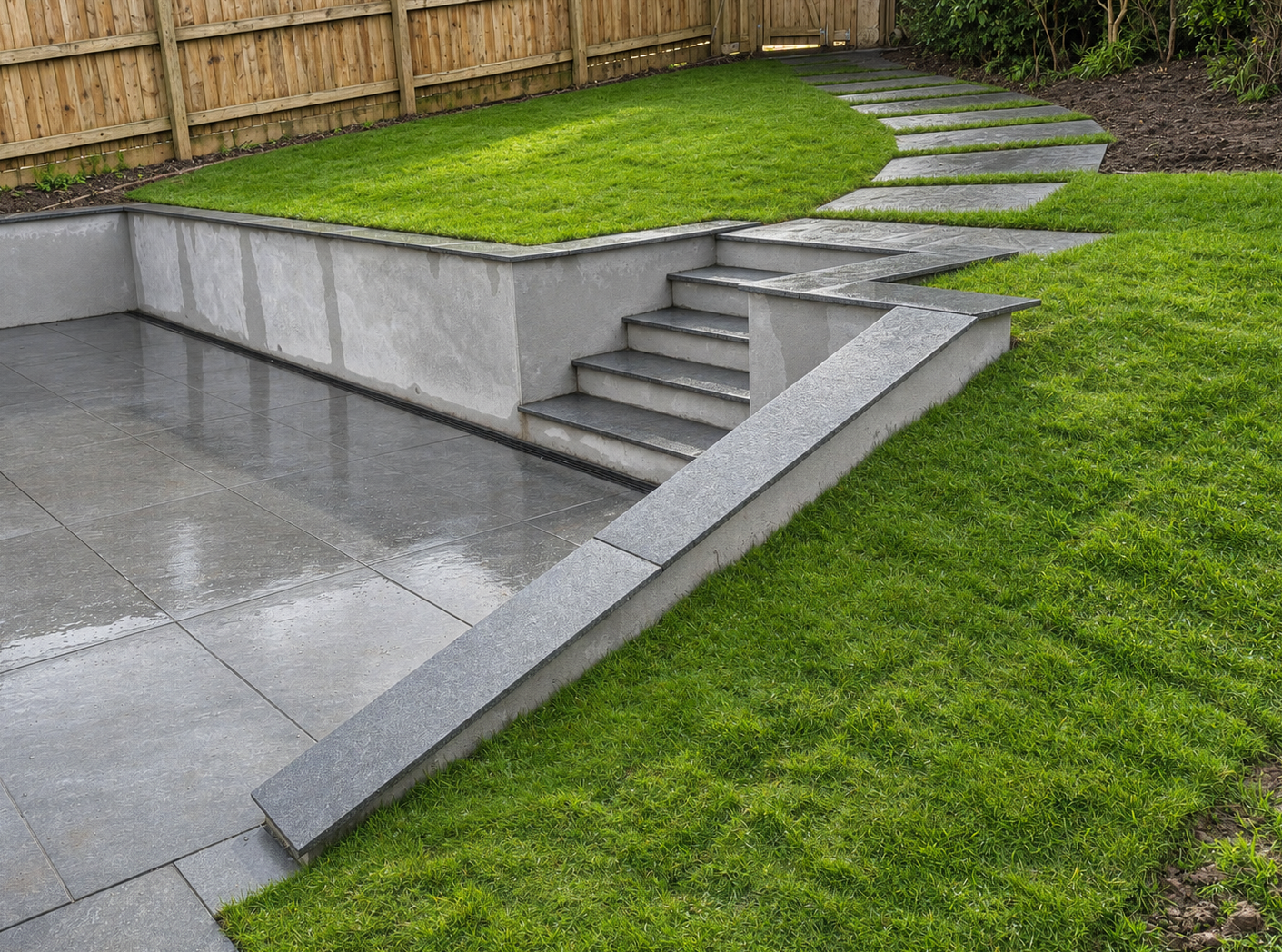
Winter can be a good time to tackle parts of the garden that don’t rely on warm weather or fast-growing plants. That might include a new patio or path, fencing, stonework, drainage or reshaping an area so it’s easier to use.
The preparation still matters. Levels need to be right, water needs somewhere to go, and the base for paving needs to suit the ground. Those things don’t change with the season. What does change is whether conditions let us do the work properly.
If the ground is too soft or saturated, bringing machinery and materials across it can cause damage. A bit of patience can save a lot of putting-right later.
It can also be a useful time to plan. You might know the garden needs attention but not be sure where to start. We can have a look, hear how you’d like to use the space and talk through a few practical options. There’s no need to have every detail worked out before getting in touch.
Can you lay a patio in winter?
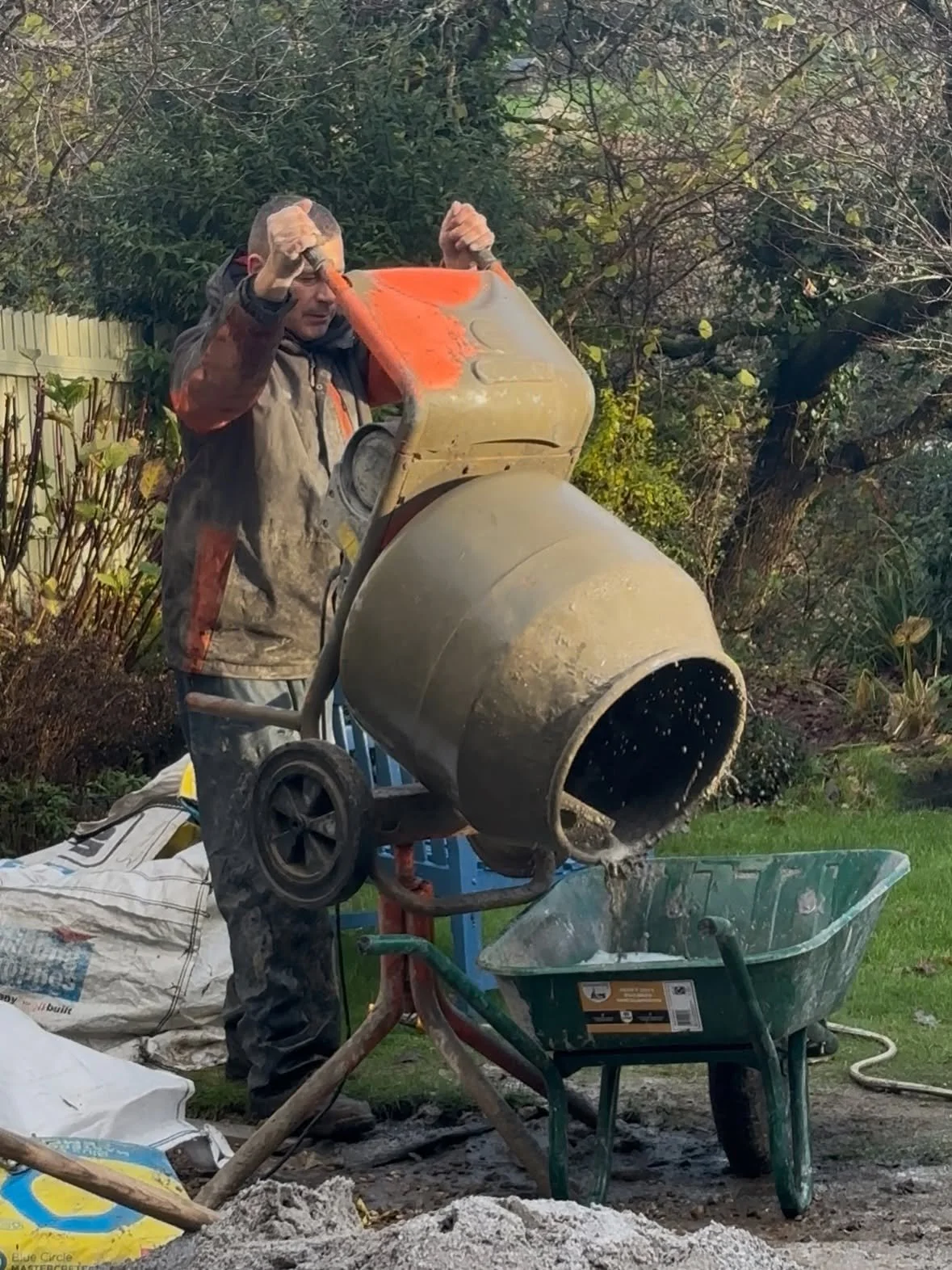
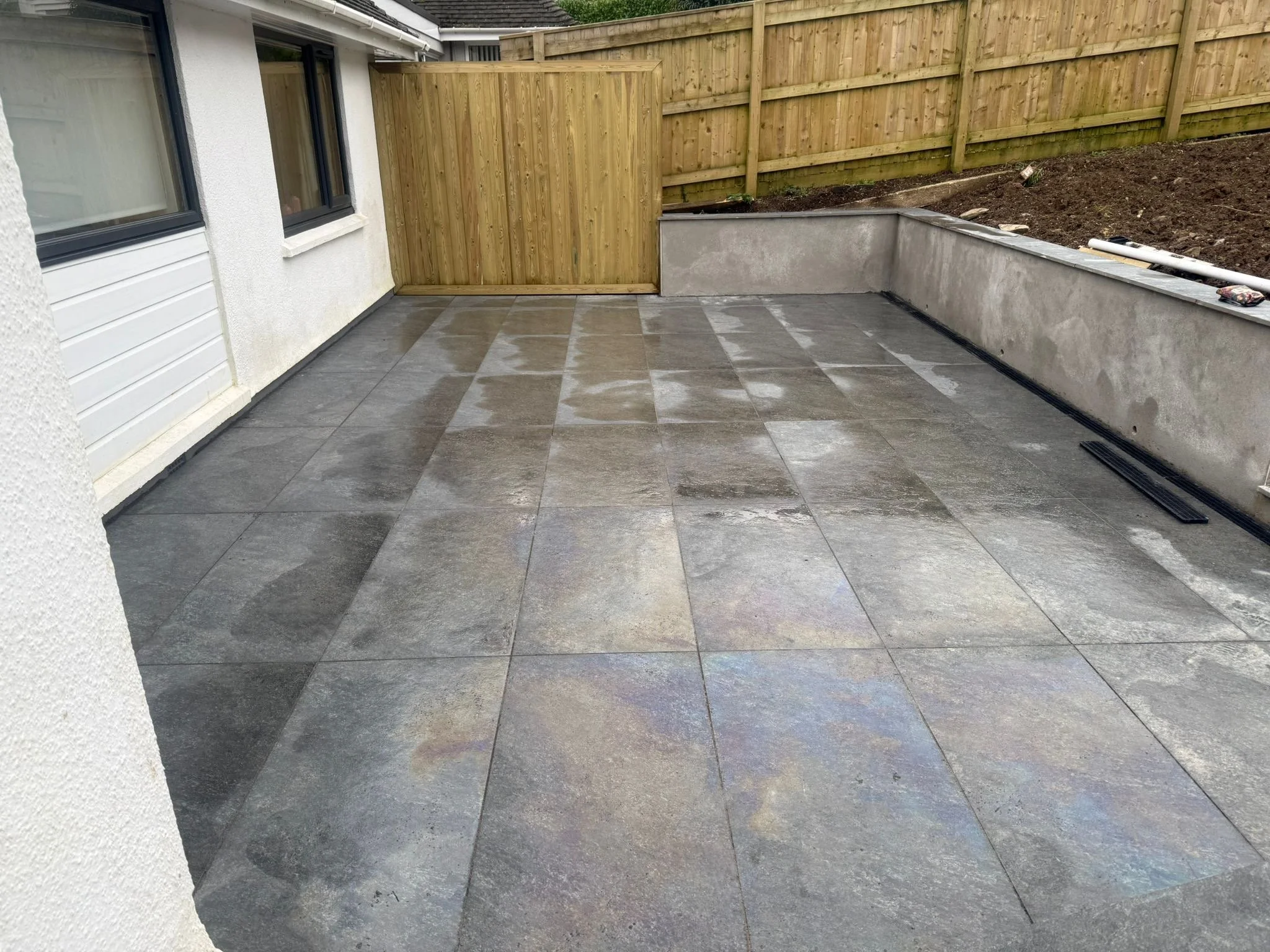
Often, yes, if the ground and weather allow it. A patio can make a garden easier to use through the wetter months, especially if the existing area turns muddy or is awkward to get across.
The important part is the groundwork: preparing a stable base, setting the levels and thinking about drainage. Rain can show where water naturally collects, but heavy rain or frozen conditions can make it difficult to prepare and lay the patio properly. If the ground isn’t suitable, we may need to wait for a better spell.
We’ll explain what we think is realistic before starting. Sometimes the answer is “we can crack on”; sometimes it’s “let’s give it a few days”. It’s better to get the foundations right than rush a job because the calendar says it’s winter.
Can you lay new turf in winter?
Turf can be laid during mild spells, as long as the soil isn’t too wet or frozen. The RHS says turf can be laid from mid-autumn into early spring when the soil isn’t too wet or frosty.
If the ground is waterlogged, walking and working on it can compact the soil and leave a poor surface. New turf also needs time to root in, so it’s best to avoid laying it when the weather is very wet, frosty or snowy. www.rhs.org.uk
A dry, mild window can be ideal. If improving the lawn is top of your list, we can have a look and tell you whether it makes sense to do it now or wait until conditions are kinder. Sometimes the best first step is sorting the ground beneath the grass.
Winter shows you where the problems are
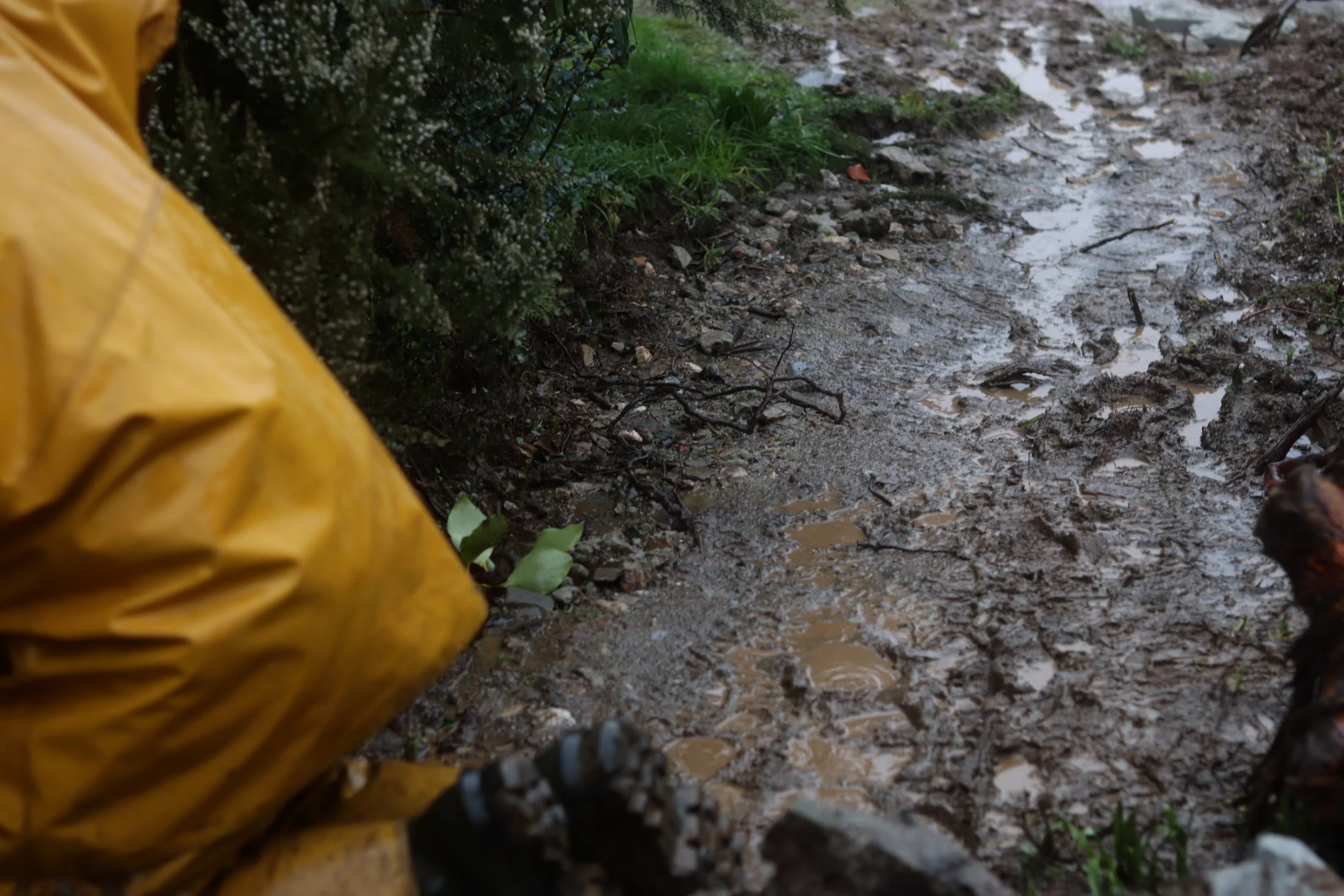
Rain has a habit of pointing out the bits of a garden that aren’t working. You might notice water sitting on the lawn, a path that gets slippery, or a patch that stays muddy long after the rest has dried.
That can be helpful when planning changes. A new path might make the route to the shed easier. Better drainage could help with a persistently wet area. Reworking the levels might stop water running towards the house or pooling where you’d rather sit.
It’s worth seeing the garden in the weather it has to cope with. A design that looks good on a sunny afternoon should also work on a wet Tuesday in January. If there’s a particular spot that gives you trouble every winter, show us where the water collects or the ground gets muddy. That gives us a better starting point for working out what might help.
Is winter a good time for planting?
Some trees, shrubs and hedging can be planted during the dormant season, depending on the type of plant and the condition of the soil. Bare-root trees and hedging are often available through the colder months.
The ground still needs to be workable. The RHS advises planting when the soil isn’t frozen or waterlogged, so plants have suitable conditions to establish.
Cornwall’s coastal exposure is another thing to consider. Wind, salt and the amount of shelter can all affect which plants are likely to suit a garden. There’s no point choosing something that looks right on a label if it’s going to struggle in its spot. A little thought at the start can save disappointment later.
What could slow a winter landscaping project down?
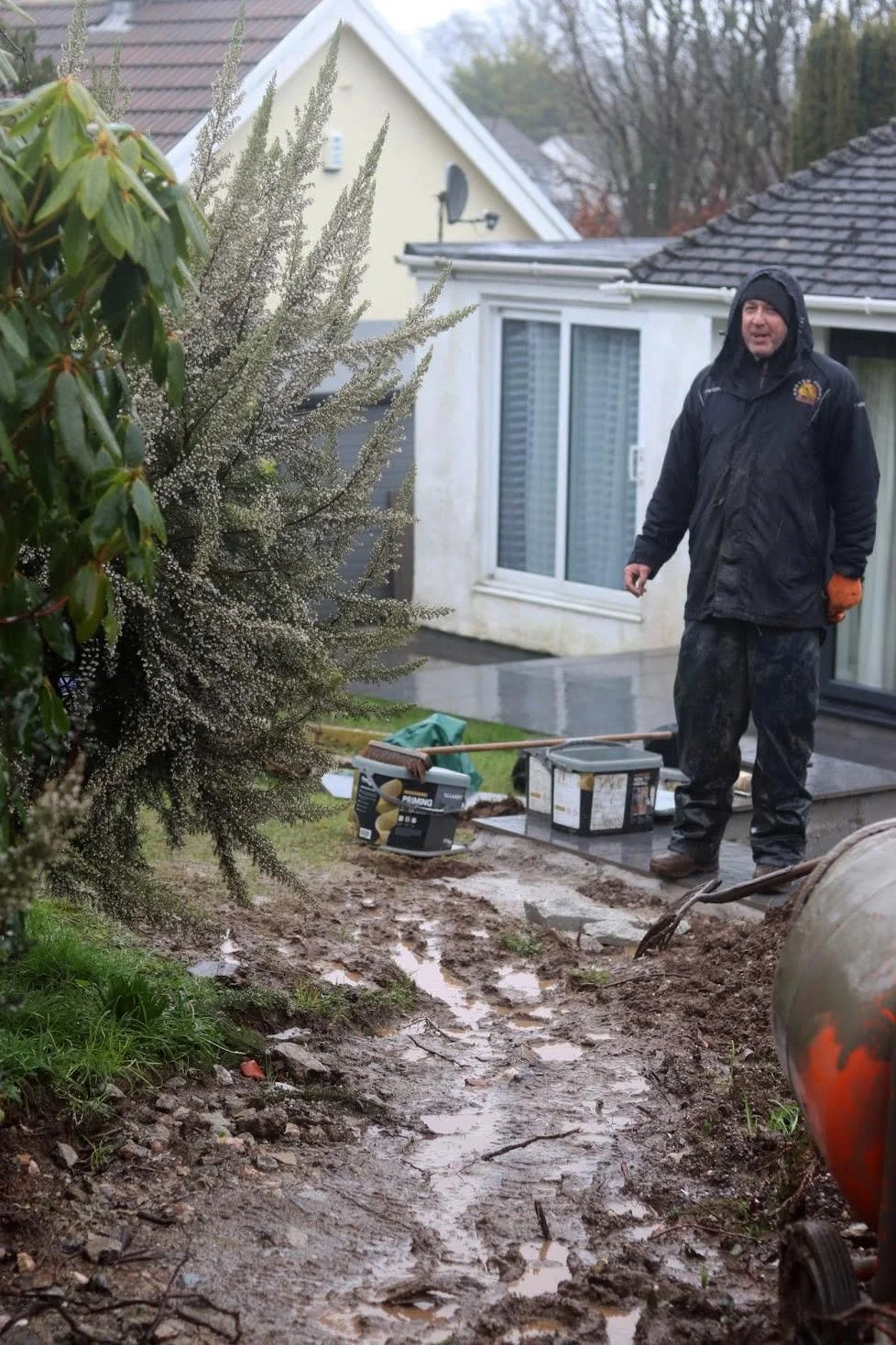
The short answer is the weather. Heavy rain, high winds, frost and saturated ground can all affect access, materials and the quality of the finished work. Some jobs are more sensitive to conditions than others.
We’ll keep an eye on the forecast and the ground rather than push on regardless. If a delay is needed, we’ll explain why and what happens next. It’s not always convenient, but it’s better to do the job when the conditions give it a fair chance.
Winter days are shorter too, so that can affect how much work is possible in a day. We’ll talk through the timing with you and keep you updated if the weather changes the plan.
Do you have to wait until spring?
Not necessarily. Winter can be a perfectly good time to plan a garden, sort hard landscaping or plant suitable trees and hedging. Other work may be better left until the ground dries out or the weather settles.
The best place to start is with the bit that’s bothering you. Is the patio too small? Does the lawn turn to mud? Is there a path you keep meaning to sort, or a fence that’s seen better days? We can come and have a look, talk through the options and give you an honest view of what could be done now.
We’ve been working in gardens around Falmouth and across Cornwall since 1979. If you’re thinking about a project in Falmouth, Truro, Helston or nearby, send us a message.
We’re always happy to have a yap.
Tom
ML Rashleigh & Son 🌿